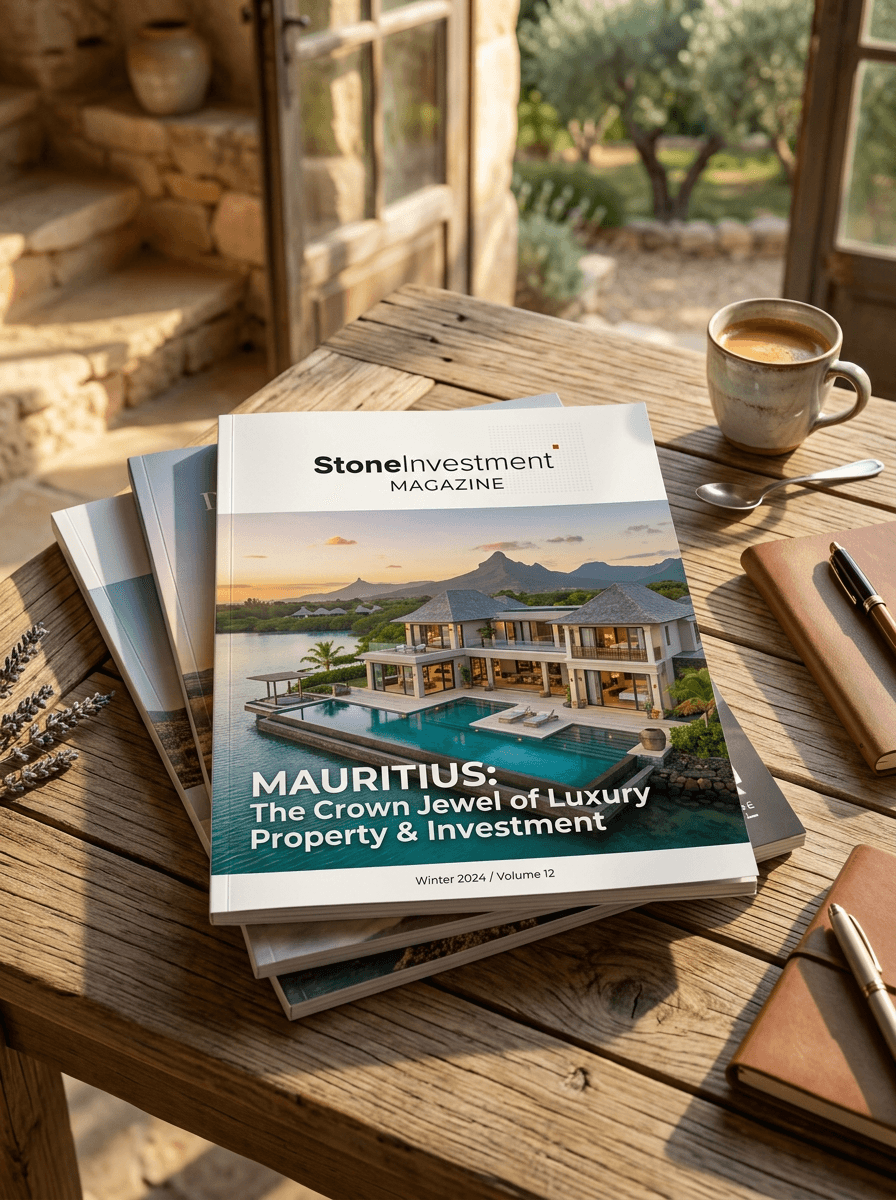
Why South Africans Are Investing in Mauritius Property
Mauritius has emerged as the premier offshore property destination for South African buyers — combining geographic proximity, cultural familiarity, legal certainty, and a lifestyle that resonates deeply with South African sensibilities.
Direct flights from Johannesburg and Cape Town take approximately four hours. Both countries share GMT+2/+4 time zones (one hour apart), English as a business language, and passions for cricket and rugby that create instant social connection. The Mauritian government and developer community actively court South African investment, recognising the shared history and complementary economic interests.
For South African buyers navigating exchange control, rand volatility, and domestic uncertainty, Mauritius offers a structured pathway to international property ownership with freehold title, residency benefits, and a territorial tax system. This guide addresses the specific regulatory, financial, and practical considerations that South African nationals face — from SARB approval to school selection and banking setup.
For a broader comparison of the two markets, see our guide to Mauritius vs South Africa.
South African Exchange Control: SDA and FIA Allowances
All South African residents are subject to exchange control administered by the South African Reserve Bank (SARB) through authorised dealers (typically your bank). Property purchases in Mauritius must comply with these regulations — unauthorised transfers are illegal and may result in penalties.
**Single Discretionary Allowance (SDA):** Every South African resident over 18 may transfer up to **R1 million per calendar year** abroad without prior SARB approval. This covers any purpose including property investment, travel, and gifts. The SDA is the simplest route for smaller investments but insufficient alone for most PDS property purchases.
**Foreign Investment Allowance (FIA):** For investments exceeding the SDA, South African residents may apply for a **Foreign Investment Allowance of up to R10 million per calendar year** (previously R20 million for individuals — verify current limits with your bank, as SARB policy evolves). The FIA requires a **Tax Compliance Status (TCS) PIN** from SARS confirming your tax affairs are in order.
**Additional amounts** beyond R10 million require specific SARB approval on application, supported by comprehensive documentation including the property purchase agreement, proof of funds, and tax clearance.
**Important:** The combined SDA and FIA cannot be used to circumvent limits. Each allowance serves distinct purposes and must be applied correctly through your authorised dealer.
Step-by-Step SARB Approval Process
The SARB approval process for property investment in Mauritius typically takes **four to eight weeks**. Plan this timeline before signing binding purchase agreements.
**Step 1 — Open foreign currency account.** Establish a foreign currency account (FCA) or use your bank's international transfer facility. Standard Bank, FNB, Absa, and Nedbank all facilitate SARB-regulated transfers.
**Step 2 — Obtain Tax Compliance Status.** Apply to SARS for a Tax Compliance Status PIN via eFiling. This confirms all tax returns are filed and liabilities settled. Processing takes 1–5 business days for compliant taxpayers.
**Step 3 — Prepare documentation.** Your bank will require: signed purchase agreement or reservation contract, developer EDB permit confirmation, proof of identity, proof of address, and source of funds declaration.
**Step 4 — Submit FIA application.** Your authorised dealer submits the application to SARB on your behalf. Include the property details, purchase price in foreign currency, and intended payment schedule.
**Step 5 — SARB approval and transfer.** Once approved, funds are transferred to Mauritius — typically to the developer's escrow account or your Mauritian bank account. Retain all approval letters and transfer confirmations permanently.
**Step 6 — Post-investment reporting.** SARB requires ongoing reporting of foreign assets. Your bank will guide annual declarations. Failure to report can affect future allowance applications.
Rand Volatility: Timing and Currency Strategy
The rand's volatility is the single greatest financial variable for South African buyers. A USD 375,000 PDS property might cost R6.8 million at R18/USD or R7.5 million at R20/USD — a R700,000 difference on the same asset.
**Forward exchange contracts.** Lock in an exchange rate for a future transfer (typically 30–90 days) through your bank. Useful when you have a confirmed purchase timeline and want certainty.
**Staged transfers.** For off-plan purchases with milestone payments, transfer funds as each payment falls due rather than converting the full amount upfront. This averages out volatility but carries risk if the rand weakens further.
**Specialist FX providers.** Companies such as Investec, Peregrine, and independent forex brokers often offer better rates than retail bank spreads on transfers above R500,000. Compare all-in costs including fees.
**USD-denominated pricing.** Most PDS developments invoice in USD, protecting the developer but exposing the buyer to rand/USD movement. Budget a 5–10% currency buffer above the current conversion rate.
**Tax clearance timing.** FIA applications and tax clearance are valid for limited periods. Coordinate currency strategy with your approval timeline to avoid re-applying.
Double Taxation Agreement: SA-Mauritius Tax Benefits
South Africa and Mauritius signed a Double Taxation Agreement (DTA) that prevents the same income from being taxed twice. For property investors, the implications are significant.
**Rental income.** If you become tax resident in Mauritius (183+ days per year), rental income is taxed at Mauritius's flat **15% rate** under the territorial system. South Africa will grant a credit for Mauritian tax paid, avoiding double taxation on the same income.
**Capital gains.** Mauritius imposes **no capital gains tax** on property disposals. South African tax residents remain liable for CGT in South Africa on worldwide assets — currently up to **18%** for individuals. However, if you cease South African tax residency (financial emigration or breaking tax residency), the DTA and exit tax rules apply. Specialist cross-border tax advice is essential.
**Dividends and interest.** The DTA limits withholding rates on cross-border payments, relevant if you hold property through a corporate structure.
**Exchange control vs tax residency.** Financial emigration (ceasing exchange control residency) and tax emigration (ceasing tax residency) are separate processes since 2021. You can be a tax resident of Mauritius while remaining an exchange control resident of South Africa, or vice versa. Each combination has distinct implications.
See our guide to Mauritius tax benefits for the full Mauritian tax framework.
The SA-Mauritius Connection: Culture, Flights, and Community
Mauritius actively cultivates its relationship with South Africa — and the affinity runs deep on both sides.
**Direct connectivity:** Air Mauritius and Airlink operate direct flights from Johannesburg (4 hours) and seasonal services from Cape Town and Durban. This makes Mauritius more accessible than many domestic South African destinations.
**Shared culture:** English is widely spoken in business and tourism. Cricket and rugby are national passions — South African expatriates integrate quickly into Mauritian social life through sports clubs, beach activities, and the established South African community.
**Time zone:** Mauritius (GMT+4) is two hours ahead of South Africa (GMT+2) — close enough for business coordination, different enough to feel genuinely offshore.
**Established community:** Significant South African populations in Tamarin, Grand Baie, and Rivière Noire provide social infrastructure — South African shops, restaurants, schools, and professional networks.
**Developer focus:** Many PDS developments specifically market to South African buyers, offering rand-friendly payment plans, SA-focused marketing events, and sales teams with South African experience.
Areas Popular with South African Buyers
South African buyers cluster in locations that combine lifestyle appeal, community, and investment fundamentals.
**Tamarin** — The west coast's premium address. South African families dominate many PDS developments here, drawn by surf culture, mountain backdrop, and a relaxed pace distinct from the north. Properties range from USD 375,000 apartments to USD 2M+ beachfront villas.
**Grand Baie** — The social heart of the north coast. Restaurants, beaches, and nightlife create a cosmopolitan atmosphere. Strong rental demand from tourists and expatriates. Entry-level PDS units from USD 375,000; premium villas significantly higher.
**Rivière Noire (Black River)** — Adjacent to Tamarin, offering golf estate living and marina access. Popular with South African retirees and semi-retired professionals seeking golf, dining, and community.
**Moka and central plateau** — Growing appeal for families prioritising schools, cooler climate, and Smart City infrastructure. Lower humidity than the coast.
Stone Investment maintains portfolio properties across all these locations. Browse villas in Mauritius to explore current availability.
Schools with SA-Compatible Curriculum
Families relocating from South Africa will find several schooling options that ease the transition.
**Northfields International High School** (Mapou, north) — Offers IGCSE and A-Level programmes aligned with the British curriculum, familiar to South African families who have used Cambridge or IEB pathways. Strong academic reputation.
**Le Bocage International School** (Moka) — IB World School offering the International Baccalaureate from primary through diploma. Excellent facilities and university placement record.
**Westcoast International Secondary School** (Tamarin area) — Serves the west coast South African community with Cambridge curriculum.
**Clavis International School** (Moka) — Bilingual French-English education with international orientation.
**French system schools** — Lycée Labourdonnais (Curepipe) and others offer the French baccalaureate for families considering long-term integration.
School fees range from MUR 80,000–200,000 per term depending on level and institution. Apply early — popular schools have waiting lists, particularly for mid-year arrivals from South Africa.
Banking in Mauritius: AfrAsia, Standard Bank, and Setup
Opening a Mauritian bank account simplifies property transactions, utility payments, and daily life.
**AfrAsia Bank** — Strong presence in the South African market with dedicated SA client teams. Offers multi-currency accounts, property transaction support, and wealth management. Popular choice for SA buyers.
**Standard Bank Mauritius** — Part of the Standard Bank Group, providing seamless connectivity between South African and Mauritian accounts. Familiar platform for SA clients.
**MCB (Mauritius Commercial Bank)** and **SBM (State Bank of Mauritius)** — Largest local banks with comprehensive retail and private banking services.
**Account opening requirements:** Valid passport, proof of address (Mauritian or SA), proof of income or funds, and reference letter from your South African bank. Non-residents may open non-resident accounts; property owners typically upgrade to resident accounts upon receiving permanent residence.
**Mortgage finance:** Mauritian banks offer mortgages to non-residents for approved scheme properties — typically 50–70% LTV at rates of 5–7% (variable). South African buyers often purchase cash using FIA funds, but local financing is available if preferred.
Coordinate banking setup with your property purchase — your notaire and Stone Investment can recommend relationship managers experienced with South African clients.
Practical Relocation from South Africa
Moving from South Africa to Mauritius involves coordinated steps across exchange control, immigration, logistics, and daily life setup.
**Property first or residency first?** Most buyers purchase property (triggering the residency application) then relocate. The permanent residence permit process takes 2–4 months after property registration.
**Household effects.** SARB allows emigrants to export household goods. Obtain the removal quote, apply for export approval, and use a reputable international mover experienced in SA-Mauritius routes.
**Vehicles.** Import duties on vehicles are high (up to 100%+ of value). Most residents purchase locally or lease. South African driving licences are valid for three months; convert to Mauritian licence thereafter.
**Healthcare.** Mauritius offers good private healthcare (Apollo Bramwell, Fortis Darné) at a fraction of SA private hospital costs. Comprehensive health insurance is recommended — MUR 50,000–150,000 annually.
**Domestic staff.** Many SA families employ domestic help in Mauritius at lower cost than SA equivalents. Agency placement is straightforward.
**Pets.** Import requires veterinary certificates, microchipping, and quarantine compliance. Plan 2–3 months for pet relocation logistics.
For the complete buying process, see our guide to buying property in Mauritius as a foreigner. Stone Investment provides end-to-end support for South African buyers — from SARB documentation to key handover and community integration.