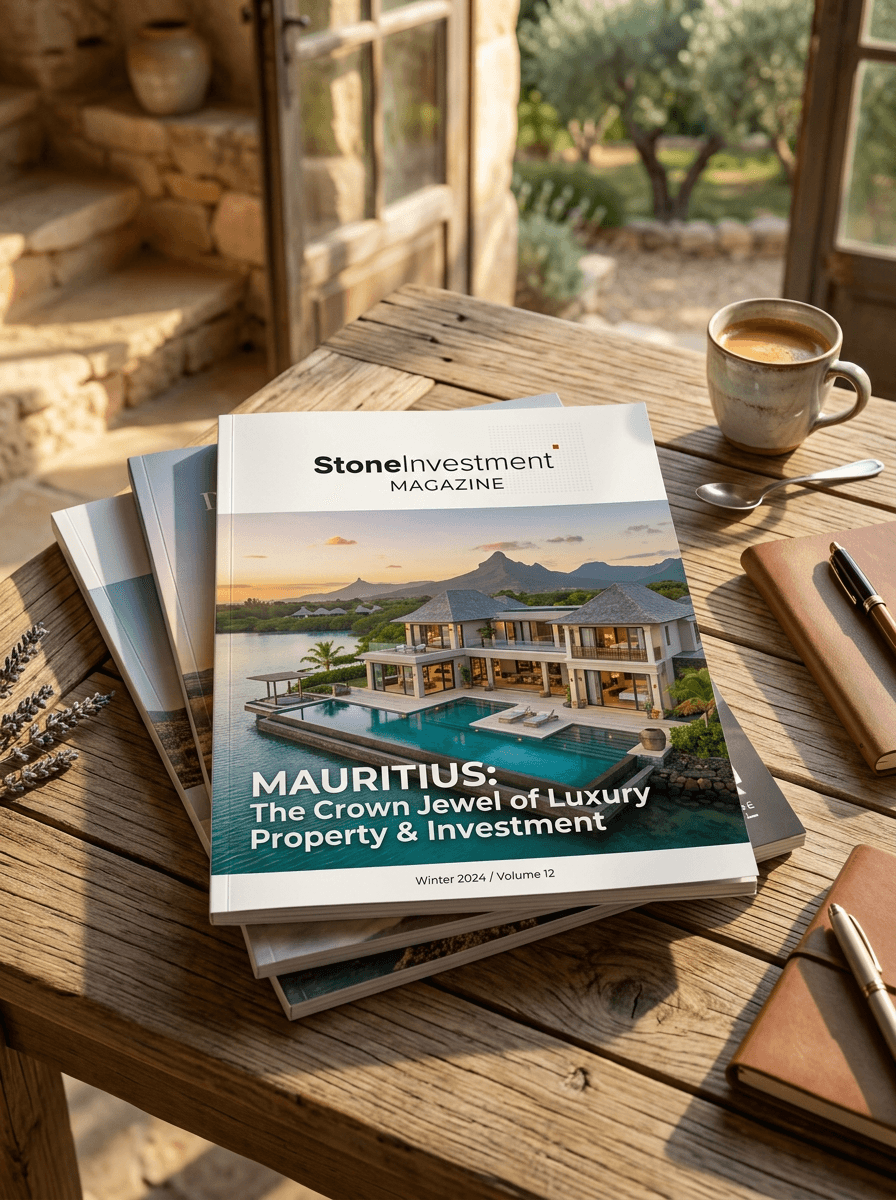
The New Luxury: Working from Paradise
The shift to remote work has permanently altered what "luxury property" means. A villa is no longer judged solely by its pool, views, and proximity to restaurants — it must also support video calls at 9am, reliable broadband at midnight, and a dedicated workspace that separates professional life from holiday mode.
Mauritius and Provence have emerged as two of the most compelling destinations for remote professionals who refuse to choose between career and lifestyle. Mauritius offers tropical living, favourable tax treatment, and the Premium Visa programme designed explicitly for remote workers. Provence delivers European culture, TGV connectivity to major capitals, and a quality of life that makes every evening feel like a reward.
This guide covers the practical requirements — visas, internet, home office design, co-working, time zones, schools, and tax — for building a professional life from a luxury property in Moka, Grand Baie, Tamarin, or Aix-en-Provence.
France: Passeport Talent and Long-Stay Visas
Remote workers wishing to base themselves in Provence must navigate French immigration rules, which differ significantly from Mauritius's open Premium Visa approach.
**Passeport Talent** — designed for highly skilled workers, researchers, artists, and investors. The "Talent Profession Libérale" category may suit self-employed remote workers with demonstrable income and professional credentials. Valid for up to four years, it provides a path to long-term residence.
**Visa de long séjour visiteur** — a long-stay visitor visa for individuals who can demonstrate sufficient passive or remote income without working for a French employer. Suitable for retirees and remote workers with established income streams. Does not permit salaried employment in France.
**EU/EEA/Swiss citizens** face no visa requirement and may live and work remotely in France freely, subject to tax residency rules.
**British post-Brexit** nationals require a visa for stays exceeding 90 days in 180. The visitor visa or Passeport Talent are the primary routes for remote workers.
**Schengen compliance** — non-EU remote workers must ensure their visa covers their intended stay duration. Overstaying Schengen limits (90/180 days) without a long-stay visa carries serious consequences.
For permanent relocation, see our guide to moving to Mauritius and Provence lifestyle for context on establishing a full-time base.
Internet Infrastructure by Area
Reliable, high-speed internet is the non-negotiable foundation of remote work from luxury property. Both Mauritius and Provence have improved dramatically, but coverage varies by location.
| Area | Fibre Available | Typical Speed | Backup Options |
|---|---|---|---|
| Moka Smart City | Yes (FTTH) | 100–500 Mbps | 4G/5G, generator |
| Grand Baie | Yes (most zones) | 50–200 Mbps | 4G/5G widely available |
| Tamarin / Black River | Partial (expanding) | 30–100 Mbps | 4G, Starlink popular |
| Aix-en-Provence centre | Yes (FTTH) | 100–1000 Mbps | 4G/5G |
| Luberon villages | Partial | 20–100 Mbps | 4G, Starlink increasingly used |
| Gordes / hilltop villages | Limited | 10–50 Mbps | Starlink recommended |
Home Office Design in Tropical and Mediterranean Villas
A luxury villa designed for remote work requires deliberate planning — ideally at purchase or renovation stage.
**Dedicated office space** — a separate room with a door is essential for video calls, confidential conversations, and psychological separation between work and leisure. Convert a bedroom, annex, or pool house into a permanent office rather than working from the kitchen table.
**Climate control** — Mauritian offices need air conditioning (budget inverter units for efficiency). Provence offices benefit from external shading, ceiling fans, and cross-ventilation to manage summer heat without excessive AC.
**Natural light** — position the desk to face a window without direct glare on screen. North-facing rooms in Provence provide consistent light without overheating. In Mauritius, east-facing rooms capture morning light before heat builds.
**Acoustic treatment** — stone walls in Provence and tiled floors in Mauritius create echo. Rugs, curtains, and acoustic panels improve call quality significantly.
**Ergonomic furniture** — import or specify a quality desk (minimum 160cm wide), ergonomic chair, monitor arm, and adequate power outlets (including USB-C). Do not compromise on ergonomics because the setting is beautiful.
**Technology infrastructure** — hardwired ethernet (Cat6 minimum) to the office, mesh WiFi for property coverage, UPS battery backup for power cuts, and a 4G/5G failover router. In Mauritius, power cuts are infrequent but possible during cyclone season; in Provence, summer storms can disrupt supply.
Co-Working Spaces and Professional Networks
Even with a perfect home office, co-working spaces provide community, meeting rooms, and a change of scene.
**Mauritius:** - **Moka Smart City** — the island's most developed co-working ecosystem, with flexible desks, private offices, and meeting rooms in a planned urban environment - **Grand Baie** — several boutique co-working spaces serve the north's expatriate and entrepreneur community - **Port Louis** — WeWork-style spaces and business centres for corporate remote workers - **Tamarin** — emerging creative community with informal co-working at cafés and the Tamarina estate
**Provence:** - **Aix-en-Provence** — multiple co-working spaces in the city centre (La Cantine, Le 7, Spaces Aix) with day passes from €20–35 - **Avignon** — growing remote worker community with co-working at Le Blazon and La Poste Co - **Luberon villages** — limited formal co-working; most remote workers rely on home offices with occasional trips to Aix
**Professional networks** — expatriate business groups, Rotary clubs, and industry-specific associations in both locations connect remote professionals with local and international contacts.
Time Zone Advantages: GMT+4 and Central European Time
Time zone positioning is a strategic advantage that remote workers in Mauritius and Provence exploit daily.
**Mauritius (GMT+4, year-round)** covers an extraordinary range: - **London (GMT/BST):** +4 hours (winter) / +3 hours (summer) — UK morning meetings at 1–2pm Mauritian time - **Paris/Berlin (CET/CEST):** +3 hours (winter) / +2 hours (summer) — European morning at 10am–12pm Mauritian time - **Dubai (GST):** Same time zone — seamless Gulf business - **Mumbai (IST):** +1.5 hours — afternoon overlap with India - **Singapore/Hong Kong:** +4 to +5 hours — morning Mauritian time covers Asian afternoon - **New York (EST/EDT):** +9 hours (winter) / +8 hours (summer) — US morning starts Mauritian evening
**Provence (CET/CEST, GMT+1/+2)** aligns naturally with European business hours and provides reasonable overlap with UK, Middle East, and US East Coast (early morning Provence = late evening US).
**Strategic implication** — Mauritius suits professionals serving European, African, Middle Eastern, and Asian markets. Provence suits those anchored to European time zones with occasional US contact. Some dual-property remote workers spend Mauritian winter (European summer) in Provence for European hours, and Mauritian summer in Mauritius for a lighter schedule.
Property Features Remote Workers Need
When evaluating luxury property for remote work, prioritise these features alongside traditional lifestyle criteria:
**Dedicated office** — minimum 12m² with door, window, and ethernet point. Properties marketed as "4 bedrooms" may become "3 bedrooms + office" — verify layout flexibility.
**Reliable power** — inverter or generator backup in Mauritius (essential for cyclone season and grid maintenance). In Provence, check electrical panel capacity for AC + office equipment simultaneously.
**Internet readiness** — confirm fibre availability at the address (not just the commune). Ask for a speed test from the current owner or neighbour. Budget €500–2,000 for installation if fibre is available but not connected.
**Mobile signal** — test 4G/5G signal strength on-site as backup. Dead zones exist in Luberon valleys and Mauritian mountain areas.
**Video call quality** — test during property viewing if possible. Background aesthetics (bookshelf, garden view, neutral wall) matter for client-facing professionals.
**Proximity to services** — remote workers still need cafés, gyms, and social contact. Properties more than 20 minutes from a town require deliberate social planning.
Browse properties with office potential or discuss your requirements with Stone Investment for tailored shortlists.
Community of Remote Professionals
Working remotely from a luxury property can be isolating without deliberate community building. Both Mauritius and Provence have growing remote professional ecosystems.
**Mauritius** attracts remote workers through the Premium Visa, PDS investor community, and the established expatriate network in Grand Baie and the west coast. Regular meetups, beach clubs, and sports groups (kitesurfing at Le Morne, golf at Belle Mare) provide social structure. The Moka Smart City community is deliberately designed to foster professional networking.
**Provence** draws remote workers from Paris (TGV commuters), London, Geneva, and Amsterdam — many semi-permanent rather than tourist. Aix-en-Provence has the densest concentration, with cafés, co-working spaces, and cultural events providing daily social contact. Luberon village life offers deeper local integration for those prioritising community over convenience.
**Online communities** — Facebook groups, Slack channels, and Meetup events connect remote workers before and after relocation. These are invaluable for practical advice (internet providers, accountants, schools) and social introductions.
**Family considerations** — remote workers with partners and children face additional community needs: schools, activities, and spouse employment. Address these before committing to a property location.
Schools for Families Relocating with Remote Work
Families relocating for remote work must balance professional infrastructure with education quality.
**Mauritius:** - **North:** Northfields International School (British curriculum), Lighthouse International School - **Central/Moka:** Le Bocage International School (IB), Moka's planned international school ecosystem - **West:** Westcoast International Secondary School - Fees range from MUR 150,000–400,000 annually (approximately USD 3,500–9,000)
**Provence:** - **Aix-en-Provence:** International Bilingual School of Provence (IBS), CIEPP, Lycée Georges Duby (international section) - **Marseille:** International School of Marseille, Lycée Français International - Fees: €8,000–18,000 per year
**Proximity matters** — daily school runs from remote Luberon villages to Aix exceed 45 minutes. Remote-working parents should factor commute time into property selection, or consider boarding options.
**Hybrid schooling** — some remote-working families combine local school with online supplementary programmes, or use fully online international schools (King's InterHigh, Harrow School Online) from a home base. This works best with reliable internet and a structured home routine.
Tax Residency Implications for Remote Workers
Remote work creates tax complexity that property ownership alone does not. Understanding residency rules prevents costly surprises.
**Mauritius tax residency** is triggered by spending **183+ days** in a tax year in Mauritius, or having a permanent home available and spending any time there with no comparable home elsewhere. Tax residents pay Mauritian income tax on worldwide income (with treaty relief for foreign-source income in many cases). The flat 15% personal income tax rate and absence of capital gains tax are significant advantages.
**French tax residency** follows similar 183-day rules plus the "centre of vital interests" test (family, professional activity, economic interests). French tax residents face progressive income tax up to 45% plus social charges on worldwide income.
**Remote worker trap** — working remotely for a foreign employer while physically present in France or Mauritius may create tax obligations in that country, even without local employment. The OECD model treaty generally assigns employment income taxation to the country where work is physically performed (with exceptions for short stays).
**Premium Visa holders** in Mauritius who stay under 183 days generally remain tax resident in their home country. Those who stay longer or purchase property through PDS should obtain Mauritian tax advice.
See our guide to Mauritius tax benefits for detailed treatment of property-related tax advantages.
Designing Your Remote Work Life
Remote work from a luxury property in Mauritius or Provence is not a fantasy — it is a practical lifestyle chosen by thousands of executives, entrepreneurs, and creative professionals who prioritise quality of life without sacrificing career.
The keys are: the right visa or residency status, verified internet infrastructure, a properly designed home office, community connection, and clear tax planning.
Stone Investment identifies properties suited to remote work — not just beautiful villas, but homes that support professional life. From fibre-ready apartments in Moka to Luberon mas with annex office potential, we match property to your working requirements.
Explore our Mauritius and Provence listings, or contact Stone Investment for a consultation on remote-work-ready luxury property.