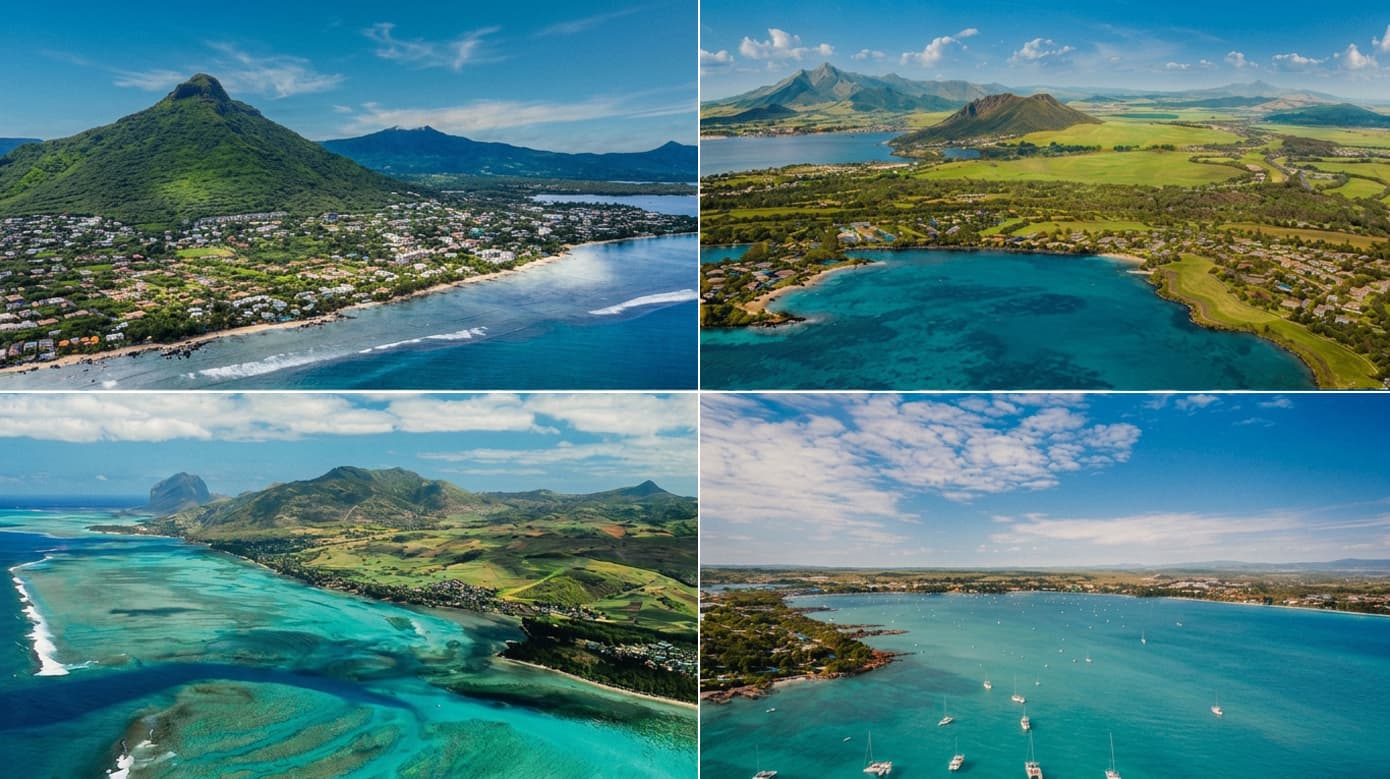
Choosing where to buy property in Mauritius is not simply a matter of picking the most famous coastline or the best-known address. The island may be compact, but it does not live as one single, uniform destination. From one area to another, the atmosphere changes clearly. Some places feel lively and social. Others feel quieter, more residential, more landscape-led or more retreat-oriented.
That difference matters because a property purchase is never only about the property itself. It is also about the setting around it, the pace of daily life, the sense of ease a place offers over time, and the kind of environment that still feels right once the first excitement has passed. A location can look attractive on a short visit and still prove to be the wrong fit when everyday life begins to take shape.
For that reason, the most useful way to approach Mauritius is not by asking which coast is the most prestigious in broad terms. It is by understanding the identity of different places and comparing them through lifestyle, rhythm and long-term fit.
Why location matters in Mauritius
In some markets, the difference from one area to another is mostly practical. In Mauritius, it is often practical and emotional at the same time. The social energy, the degree of calm, the relationship with the landscape, the level of convenience and the overall pace of life all shift from one part of the island to another.
The North offers the greatest concentration of beaches, restaurants, shopping and everyday convenience. The West is shaped more by outdoor living and a laid-back coastal rhythm. The East feels more spacious and composed, while the South is quieter, greener and more retreat-oriented. That is why location deserves careful reading in Mauritius. The question is not only where a buyer can purchase, but where a property can genuinely support the kind of life they want to live.
The North
The North is often the easiest part of Mauritius to picture from abroad because daily life feels immediately accessible there. Beaches, restaurants, cafés, shopping, schools, clinics and leisure all sit within a part of the island that is well established, internationally legible and easy to navigate. But the North does not live in one single way. Between Grand Baie, Pereybere, Mont Choisy, Cap Malheureux and Grand Gaube, the atmosphere shifts quite clearly from one area to another.
Grand Baie and Pereybere
Grand Baie is the North at its most active and most outward-looking. It is one of the island’s best-known hubs for restaurants, cafés, shopping, nightlife and day-to-day convenience. For a foreign buyer, that matters because the area is easy to inhabit from the start. Daily life feels straightforward here, with services, leisure and social life already concentrated in one place. That ease also extends to the water, with boat excursions, catamaran outings and access to the northern islets reinforcing the area’s lively coastal energy.
Pereybere belongs to that same northern axis, but with a more relaxed and more residential feel. It remains closely connected to the convenience of Grand Baie, yet the atmosphere is softer, more beach-led and less driven by movement. Its calm lagoon and easy snorkelling also strengthen that appeal for buyers who want the practical side of the North without living in its busiest setting.
Together, Grand Baie and Pereybere suit buyers who want a part of Mauritius that feels easy, lively and well connected, but where the degree of energy can still be adjusted depending on the exact location chosen.
Mont Choisy
Mont Choisy offers a calmer and more spacious version of the North. The long bay, the open shoreline and the wider sense of breathing room give the area a more composed residential feel. It retains the region’s key advantages, including beach access, restaurants and proximity to Grand Baie, yet the atmosphere remains less animated and more settled. The presence of an 18-hole championship golf course adds to that appeal, giving Mont Choisy a more distinctive lifestyle dimension without disturbing its calmer rhythm.
This is what makes Mont Choisy so appealing. It suits buyers who want the practicality of the North, but in a setting that feels more open, more polished and less socially intense. The lifestyle here is relaxed without feeling remote, and refined without feeling closed off.
Grand Gaube and Cap Malheureux
Grand Gaube and Cap Malheureux bring out a quieter expression of the North. Here, the rhythm is slower, the setting more scenic, and the atmosphere more village-like. These are areas that appeal less through activity and more through beauty, calm and a stronger sense of place.
Cap Malheureux has a clear visual identity, with its famous coastal church, sea views and position at the northern tip of the island. It feels distinctive, picturesque and relatively removed from the busier mood of Grand Baie. Grand Gaube is quieter still, with a more low-key coastal character and a softer, more local feel.
For buyers who are drawn to the North but want less movement, less visibility and a more peaceful day-to-day setting, Grand Gaube and Cap Malheureux often make more sense than the better-known northern hubs.
The West
The West has become one of the island’s most distinctive residential regions for buyers who are drawn to lifestyle as much as to property itself. It is known for its warmer, drier climate, its strong connection to the sea and mountains, and a way of life that often feels more open-air, relaxed and grounded in everyday liveability. Between Tamarin, Black River and the wider west coast, the region appeals to buyers who want Mauritius to feel scenic, sunny and easy to inhabit, but also practical enough to support full-time life over the long term.
Black River and Tamarin
On Mauritius’ west coast, Black River and Tamarin form one of the island’s most distinctive lifestyle areas. Their appeal lies not only in scenery, but in a genuinely laid-back way of life shaped by sun, sea, mountains and outdoor living. This part of the island is known for its warmer, drier climate and its slower, more easygoing rhythm, which gives daily life a more open-air and relaxed feel than many other parts of Mauritius.
Tamarin still carries the charm of an old fishing and surf village, with sunsets, waves and a coastal atmosphere that feel lived-in rather than staged. Black River adds a slightly more settled and residential balance, with lagoon access, boating culture, village life and everyday convenience close at hand. Together, they create a west-coast setting that feels authentic, sunny and highly liveable.
The area also appeals because it supports a full lifestyle rather than a single image. Surfing, hiking, paddleboarding, sailing, deep-sea fishing and access to the Black River Gorges all contribute to its character, while schools, healthcare, restaurants, shopping and a strong local-and-expat community make it work well as a year-round residential choice.
For many buyers, that combination is exactly the point. Black River and Tamarin suit those who want a lifestyle that feels relaxed, sunny and connected to nature, while still remaining practical, welcoming and easy to inhabit over time.
The East
The East tends to appeal to buyers who are drawn less to movement and visibility than to space, composure and a quieter coastal rhythm. With its long beaches, broad lagoons and lower-density environment, this side of Mauritius offers a more measured and open way of life. For buyers who are looking for calm, scenic surroundings and a more spacious lifestyle, the East often holds a very natural appeal.
Beau Champ and the wider East coast
Around Beau Champ and the wider East coast, that eastern identity becomes especially easy to feel. The attraction is not based on social intensity, but on breathing room, visual openness and a more measured way of life. This is one of the parts of the island that often appeals most when the priority is serenity, space and a calmer pace of life.
It also suits buyers who are comfortable with a lower-density environment, where the reward lies in space, setting and a quieter day-to-day rhythm rather than constant activity on the doorstep. Renowned golf courses and a well-developed hospitality environment add comfort and depth to that lifestyle without disturbing the East’s calmer rhythm.
What makes the East particularly interesting is that calm does not necessarily mean emptiness. The region still carries depth, quality and a clear lifestyle proposition. It simply expresses them differently. For buyers who value golf, lagoon surroundings, space and a quieter day-to-day rhythm, the East often begins to make strong emotional sense.
The South
The South tends to appeal to buyers who are drawn less to visibility and activity than to nature, space and a more preserved coastal setting. This side of Mauritius is known for its wilder landscapes, lower density and quieter rhythm, giving it a more grounded and unspoiled feel than many other parts of the island. For buyers who are looking for peace, scenic surroundings and a lifestyle shaped more by setting than by movement, the South often holds a strong and very distinctive appeal.
Bel Ombre
On Mauritius’ wilder and less developed southern coastline, Bel Ombre gives that southern identity one of its clearest expressions. The area is known for its preserved landscapes, its scenic setting between sea and greenery, and a lifestyle that feels peaceful without being empty. It appeals to buyers who are drawn to unspoiled surroundings, but also want leisure, wellness and day-to-day comfort to remain part of the experience.
Bel Ombre is not about constant movement or a highly social coastal atmosphere. Its appeal lies more in the quality of the setting, the sense of calm, and the balance between privacy and lifestyle. Golf, spas, fitness facilities and resort-style amenities contribute to that experience, while a small selection of nearby shops and restaurants supports everyday life. That wider hospitality environment adds real depth to the lifestyle, giving Bel Ombre a level of comfort, service and leisure that feels unusually complete for such a peaceful and preserved part of the island. Broader amenities, schools and services remain accessible within a reasonable drive, whether towards Tamarin or further inland.
This part of the South feels more spacious, more grounded and more residential in spirit. For buyers looking for peace, nature and leisure opportunities within a well-structured environment, Bel Ombre stands out as one of the island’s most distinctive settings.
Choosing the right part of Mauritius
The right location is rarely the one that looks best in abstract terms. It is the one that fits the life a buyer wants to build around the property.
Some buyers prioritise convenience, restaurants, schools, shopping and a setting that feels easy to inhabit from the start. Others are looking for a more laid-back coastal rhythm, stronger connection to outdoor life, or a quieter environment shaped by space, nature and privacy. In Mauritius, those differences are not secondary. They are often what determine whether a place feels right over time.
That is why the choice should not be made on prestige alone. It should be made on pace, setting, daily comfort and long-term fit.
Bringing lifestyle and buying structure together
For foreign buyers, choosing the right area is only part of the decision. Mauritius does not open every form of residential acquisition in the same way, so location always needs to be considered alongside the legal route through which the purchase would be made.
That matters because the same lifestyle preference can lead to different practical options depending on the type of property, the approved scheme and the buyer’s wider objectives. A location may feel right on paper, but the structure of the acquisition still needs to make sense in legal and practical terms.
The strongest decision brings those elements together. Once a buyer has identified the part of Mauritius that suits their lifestyle, the next question is which acquisition route, property type and ownership structure fit that choice most coherently.
Once those differences become clear, Mauritius begins to make more sense. It stops feeling like one single destination and starts to read as a collection of places with genuinely different identities. That is usually the point at which a better property decision becomes possible.
